How hand-painted bonbons are made
We start each bonbon with hand-applied color and a molded shell of tempered couverture chocolate. We fill the shell with caramel, ganache, praline, or a combination of textures, then seal it with chocolate.
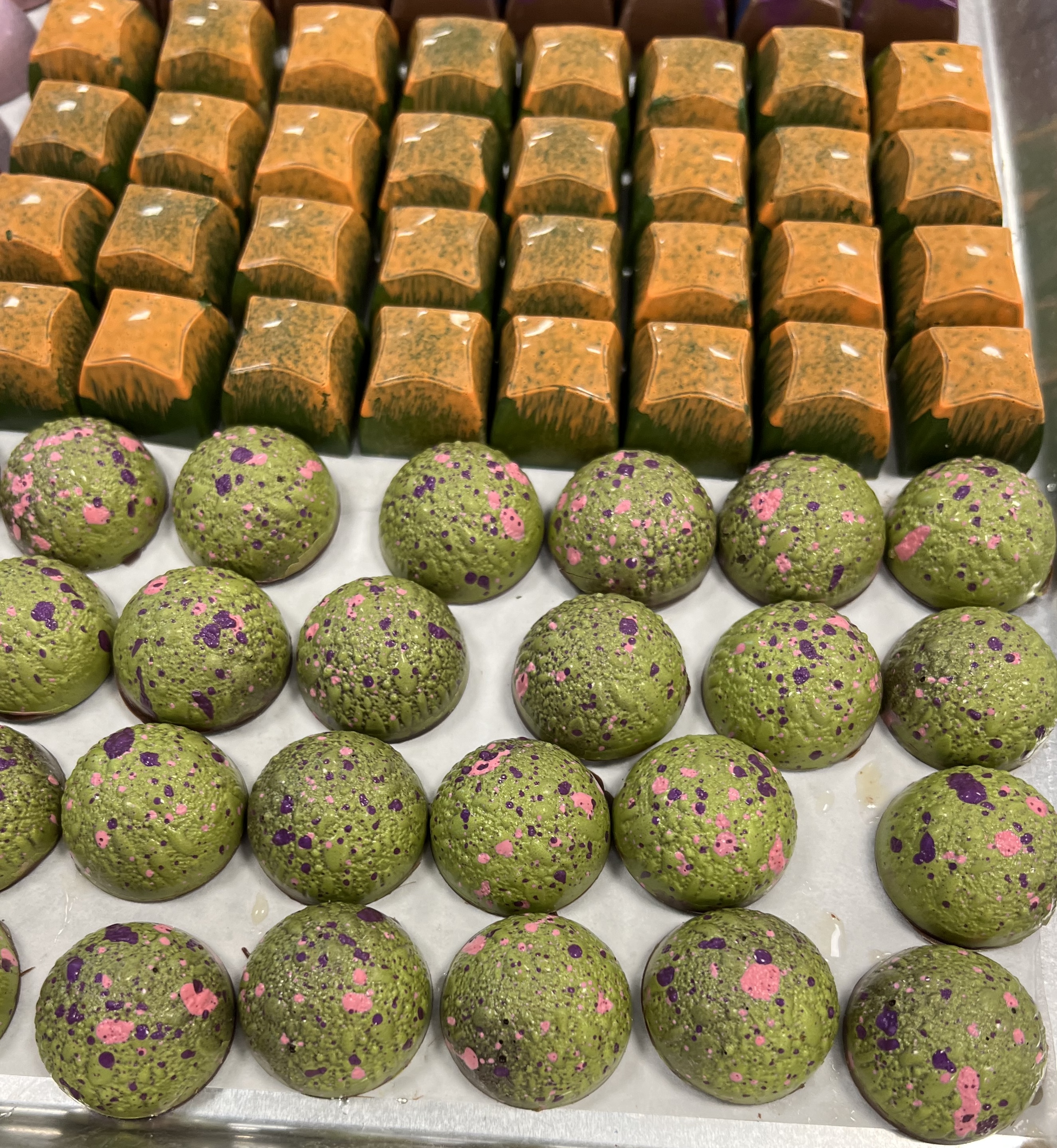
From encaustic painting to chocolate
Our founder, Jacqueline Cornette Schwartz, has spent decades working with encaustic, an art form that uses heat to fuse layers of wax and pigment. She became curious about chocolate after seeing a chocolatier add color to sculptures. In her bonbons, she uses the same patience with heat, layers, and color that she brings to her art studio.
How does tempering change the shell?
Tempering is the process of heating and cooling chocolate to control how the cocoa butter crystallizes. A well-tempered shell sets with a gloss and a clean snap and releases cleanly from the mold. We work with several kinds of couverture, including dark, milk, white, ruby, and caramelized gold chocolate.
Why plan the filling and shell together?
Every bite includes both. Dark chocolate gives our salted caramel a deeper cocoa note, and a gluten-free pretzel praline adds crunch. We also make fillings such as raspberry or coffee ganache and sometimes layer several components in one piece.
We make our fillings in small batches and use ingredients such as fresh cream in some recipes. Follow the storage and best-enjoyed-by guidance that comes with the specific chocolates you buy.